

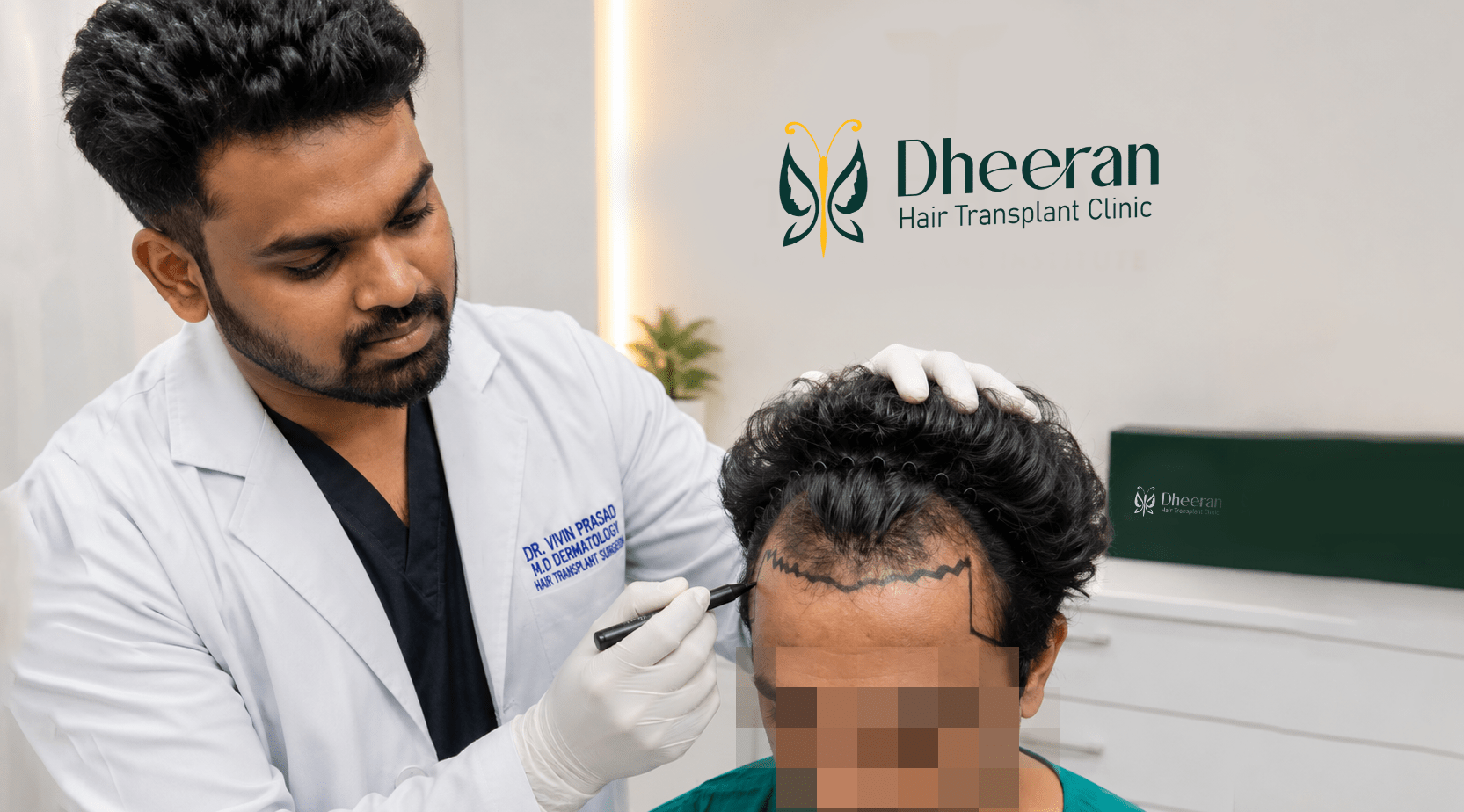
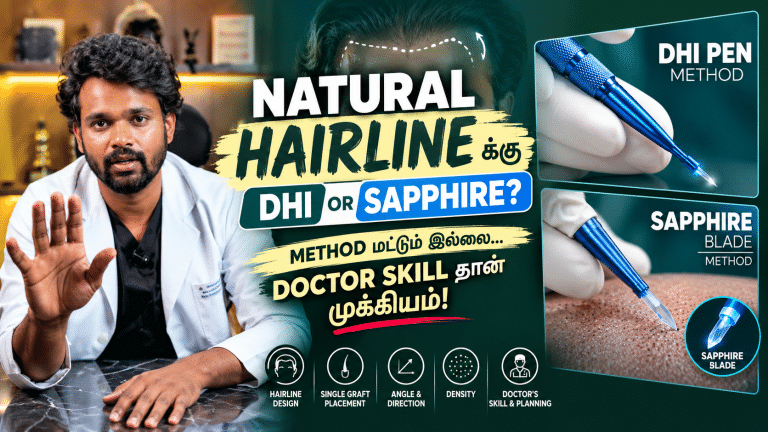
When people say a hair transplant “looks fake,” they are almost never talking about the hair itself. They are talking about the hairline. A poorly designed hairline — too straight, too low, too dense at the front — is the single most visible sign that someone has had a procedure. At Dheeran Hair Transplant Clinic in Coimbatore, natural hairline design is not an afterthought. It is the first thing Dr. Vivin Prasadh does before a single graft is placed.
This article explains exactly what makes a hairline look natural, how we design it, and why the difference between a good and bad hairline comes down to decisions made before surgery even begins.
⭐ Key Takeaways
- A natural hairline is never a straight line — it has micro-irregularities by design
- Single-hair grafts at the front edge are non-negotiable for a natural look
- Graft angle and direction matter more than graft count
- Hairline height must match your face shape and age
- At Dheeran Clinic, Dr. Vivin Prasadh personally designs every hairline before surgery
Why Do Some Hair Transplants Look Unnatural?
You have seen them — hairlines that look drawn on with a ruler, rows of plugs that look like doll hair, or a front edge so perfectly straight it could only exist in a surgery. These results happen for specific, avoidable reasons:
- Straight hairline design — No human being has a perfectly straight hairline. Nature builds in soft irregularity.
- Multi-hair grafts at the hairline edge — Placing 2 or 3-hair grafts at the very front creates a blunt, dense edge that looks transplanted.
- Wrong angle of implantation — Hair should lie flat (10–15 degrees) at the front. Upright grafts cast shadows and look pluggy.
- Hairline placed too low — An unnaturally low hairline ages badly and looks overdone immediately.
- Technician-designed hairlines — When a coordinator or technician draws the hairline instead of the surgeon, artistic judgment is missing.
⚠️ Important: At Dheeran Clinic, Dr. Vivin Prasadh personally draws the hairline on every patient before surgery begins. This step is never delegated to a technician or coordinator.
What Makes a Hairline Look Natural? The 5 Principles
Micro-Irregularity — The Hairline Must Never Be Straight
Look closely at anyone’s natural hairline — it has small peaks, micro-recessions, and soft undulations. It is never a straight line. At Dheeran Clinic, the hairline is drawn with deliberate soft irregularity: slight peaks at the temples, a gentle central point, and randomised micro-variation across the entire front edge. This is what makes the result undetectable.
Single-Hair Grafts at the Front Edge — Always
The very front 0.5–1 cm of a natural hairline contains only single-hair follicular units. This is how nature works — thin, fine transitional hairs that gradually increase in density as you move backward. Placing 2 or 3-hair grafts at the leading edge creates an abrupt, dense line that reads as surgical. At Dheeran Clinic, we use a zone system — Zone 1 (front edge) uses only singles, Zone 2 uses mixed 1s and 2s, Zone 3 uses 2s and 3s for density.
Correct Angle — Hair Must Lie Flat, Not Stand Up
Natural frontal hairline hair grows at a very acute angle — 10 to 15 degrees forward. This makes the hair lie flat against the forehead, creating the soft, swept appearance of a natural hairline. When grafts are implanted at steep angles (30–45 degrees), the hair stands away from the scalp, casts visible shadows, and looks like doll hair. Dr. Vivin Prasadh uses a precise angulation technique developed over years of practice to ensure every front-zone graft lies exactly as nature intended.
Hairline Height — Matched to Your Face and Age
A hairline that sits too low looks overdone immediately — and ages badly. A 25-year-old’s hairline on a 45-year-old face looks wrong within years as the face ages but the hairline stays fixed. At Dheeran Clinic, hairline height is planned conservatively and age-appropriately. We consider your current age, projected future hair loss, facial proportions, and forehead height. We also always plan for the future — ensuring enough donor grafts remain for future sessions if needed.
Growth Direction — Every Hair Must Follow Natural Flow
Hair in different parts of the scalp grows in different directions — forward at the front, sideways at the temples, whorl patterns at the crown. When grafts are implanted without respecting these natural growth directions, the result looks disorganised and unnatural regardless of density. Dr. Vivin Prasadh maps each patient’s existing growth pattern before surgery and replicates it precisely in the recipient area.
“A natural hairline is not something you can draw with a ruler. It is something you have to feel — built from a deep understanding of how faces age, how hair grows, and how light falls on the scalp.”
— Dr. Vivin Prasadh, Dheeran Hair Transplant Clinic, Coimbatore
The Dheeran Clinic Hairline Design Process
Here is exactly what happens at Dheeran Clinic before the first graft is ever placed:
Scalp Assessment & Donor Analysis
Dr. Vivin examines donor density, hair texture, scalp laxity, and existing hair pattern. This determines how many grafts are available and how they should be distributed.
Facial Proportion Mapping
The ideal hairline height is calculated using facial thirds — forehead height, face width, and temple angles are all considered to create a hairline that suits your specific face, not a template.
Hairline Drawing — By Dr. Vivin Prasadh, Not a Technician
The hairline is drawn directly on the scalp with a surgical marker. Soft peaks, micro-irregularity, and correct height are established at this stage. The patient sees and approves the design before surgery begins.
Zone Planning — Single to Multi-Hair Gradient
The hairline area is divided into zones. Zone 1 (leading edge) receives only single-hair grafts. Zone 2 mixes singles and doubles. Zone 3 uses doubles and triples for density. This gradient is what creates the soft, natural transition.
Precise Implantation at Correct Angle & Direction
Each graft is placed at the pre-planned angle (10–15 degrees at the front, varying further back) and in the correct growth direction. This is the most technically demanding stage — and it is always performed by Dr. Vivin personally.
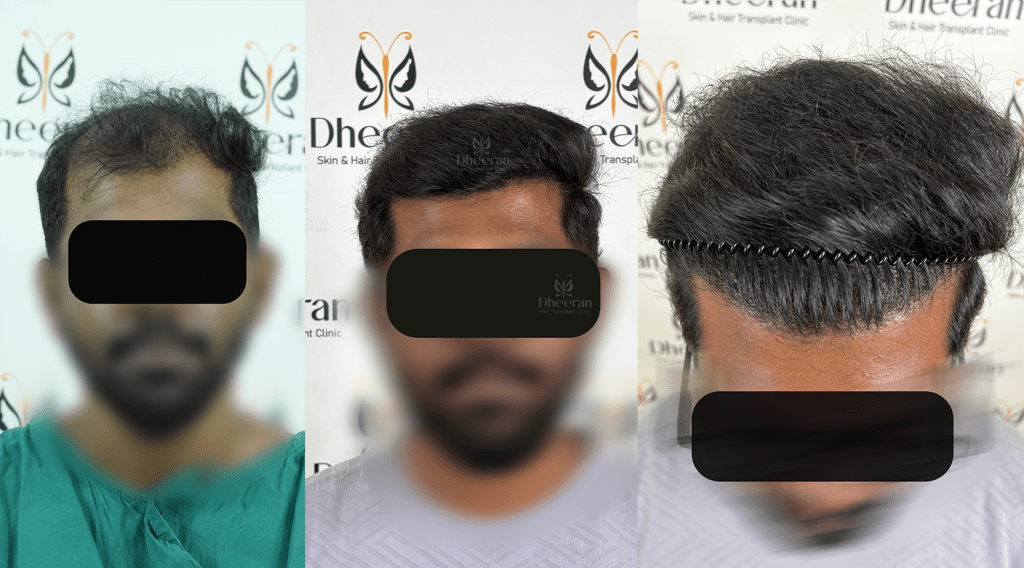
Natural Hairline vs Unnatural Hairline — Side by Side
Natural Hairline
- Soft, irregular front edge
- Single hairs at leading edge
- Hair lies flat — 10–15° angle
- Gradual density increase backward
- Age-appropriate height
- Matches natural growth direction
- Undetectable under any light
Unnatural Hairline
- Perfectly straight line
- Multi-hair grafts at front edge
- Hair stands away from scalp
- Abrupt density change
- Too low — unage-appropriate
- Hair grows in wrong direction
- Obvious under direct lighting
What About Hairline Correction?
If you have had a previous transplant and are unhappy with your hairline — whether it looks too straight, too low, too dense, or uses visible multi-hair grafts at the front — hairline correction is possible.
At Dheeran Clinic, correction procedures involve carefully redistributing existing grafts, adding single-hair micro-grafts to soften a hard edge, and in some cases, removing misplaced grafts using laser or FUE extraction. Every correction case is assessed individually by Dr. Vivin Prasadh.
Frequently Asked Questions
Q: Will my hairline look natural immediately after surgery?
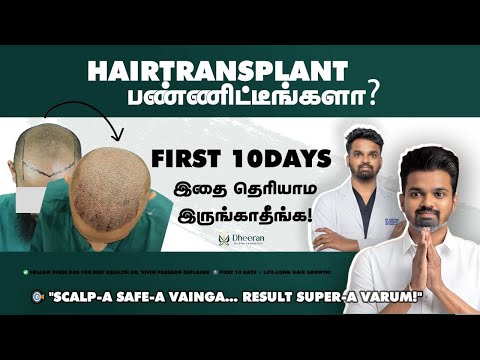
Immediately after surgery, the transplanted area will show small crusts and slight redness for 7–10 days. At 2–3 weeks, the transplanted hairs shed (this is normal — the follicle remains). New growth begins at 3–4 months. A fully natural, dense result is visible at 10–12 months.
Q: Can I style my hair normally after a hair transplant?
Yes — completely. Because the transplanted hair behaves exactly like your natural hair, you can cut, style, colour, and wash it as normal after full healing. Most patients find that once the result is complete at 12 months, styling is effortless.
Q: How do I know if my hairline design is right before surgery?
At Dheeran Clinic, the hairline is drawn on your scalp with a surgical marker before surgery begins. You see it, discuss it with Dr. Vivin, and approve it before any procedure starts. You are never taken into surgery without seeing and agreeing to the design.
Q: Will a natural hairline suit my face shape?
Yes — because the design is custom-made for your face. There is no single “natural hairline” template. Dr. Vivin considers your facial thirds, forehead height, temple angles, and existing hairline remnants to create a design that is specific to you and flattering to your face shape.
Q: Can women get natural hairline transplants?
Yes. Female hairline restoration follows the same principles but with different design considerations — women’s natural hairlines tend to be slightly lower and rounder. At Dheeran Clinic, female hairline cases are designed specifically to suit feminine facial proportions.
See What a Natural Hairline Looks Like on You
Book a free consultation with Dr. Vivin Prasadh. He will personally design your hairline, show you what it will look like, and give you a complete treatment plan — before you commit to anything.
Conclusion
A natural hairline is the most important outcome of any hair transplant procedure. It is also the hardest to achieve — requiring artistic judgment, technical precision, and a deep understanding of how faces age. The five principles covered in this article — micro-irregularity, single-hair grafts, correct angle, age-appropriate height, and natural growth direction — are the foundation of every result at Dheeran Hair Transplant Clinic.
When Dr. Vivin Prasadh designs a hairline, the goal is simple: no one should ever be able to tell you had a procedure. You should simply look like yourself — with your hair back.
📍 Dheeran Hair Transplant Clinic — Ganapathy, Coimbatore 641006 | ☎ 93451 45978
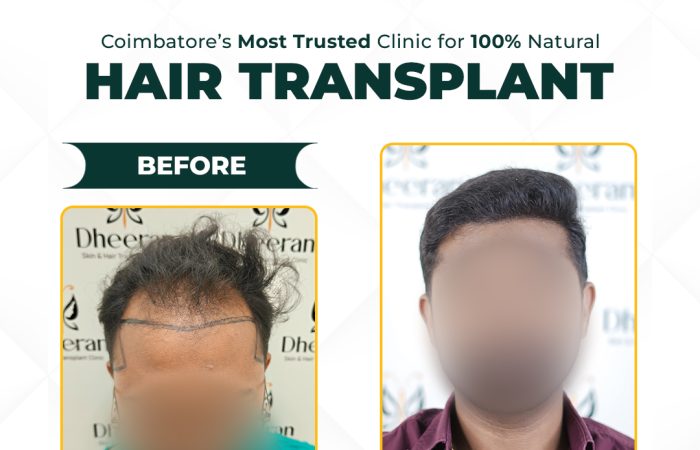
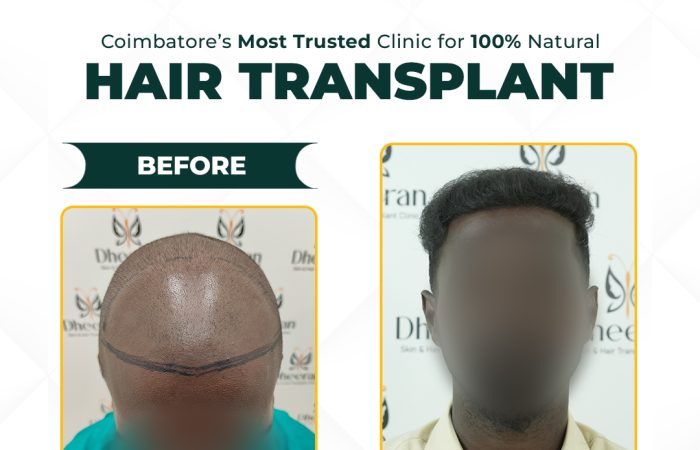
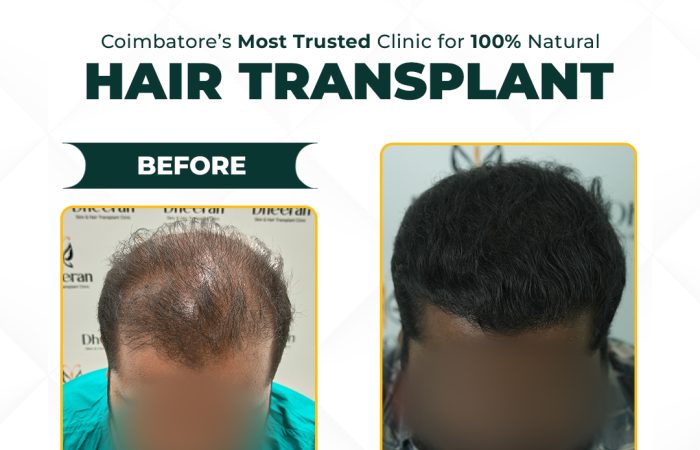
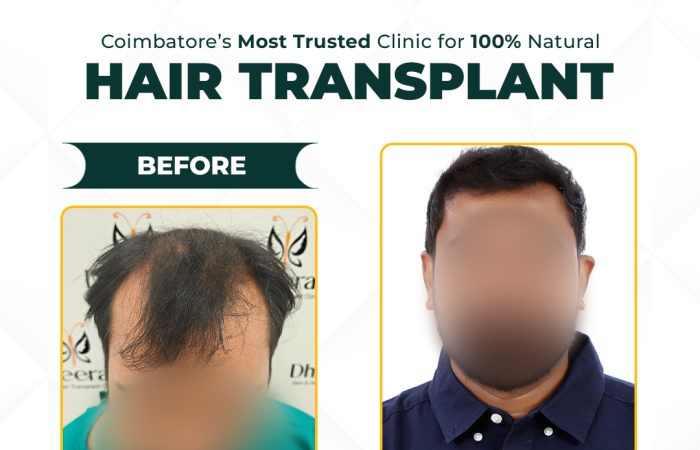
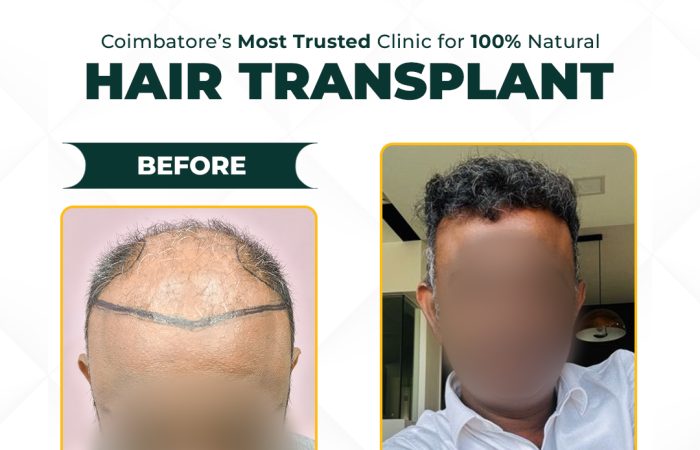
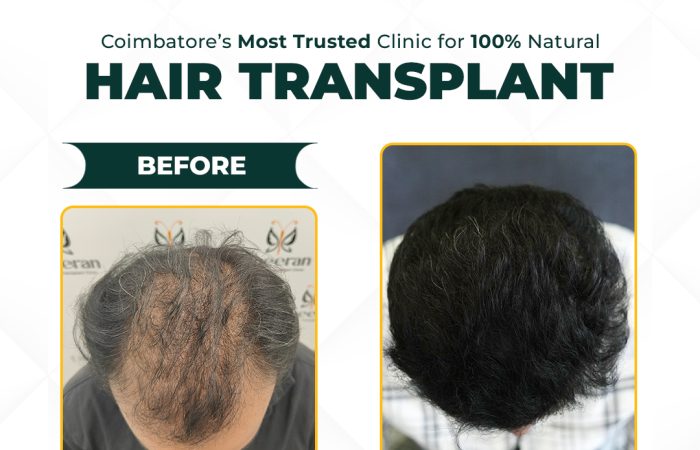
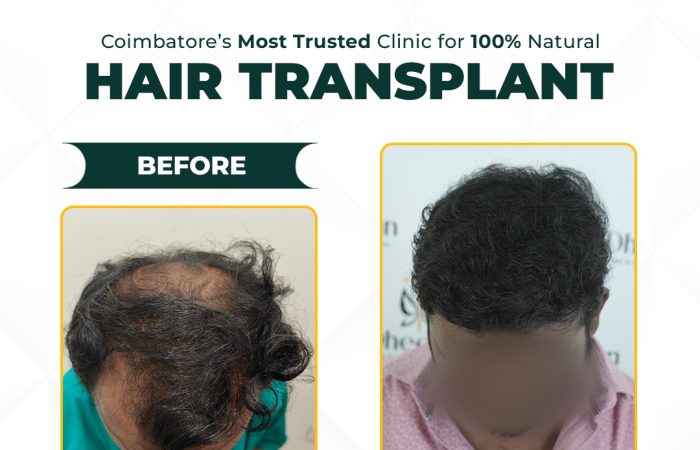
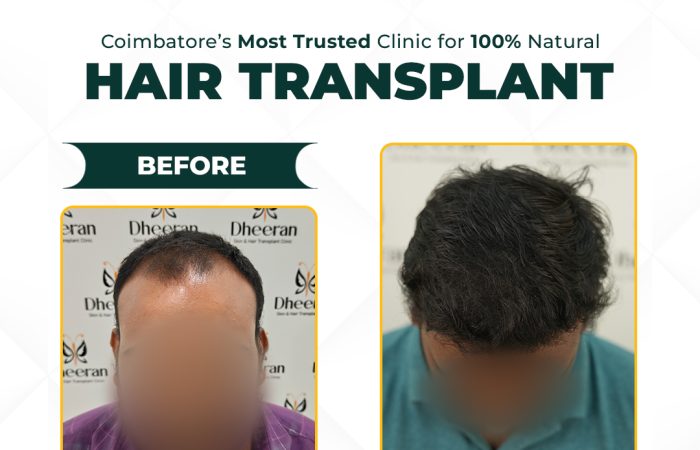
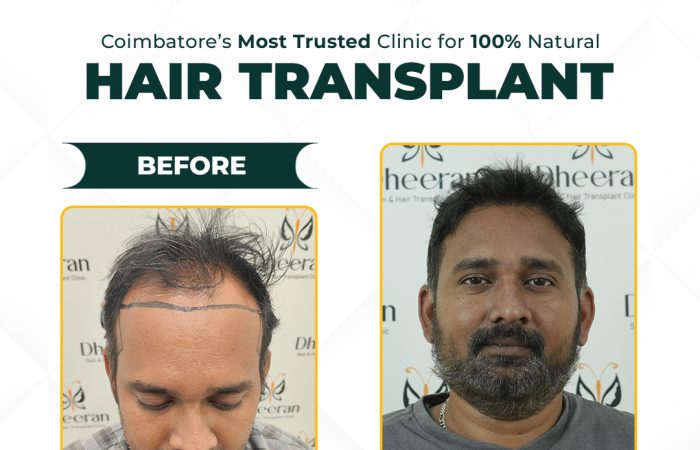

Patient Testimonials & Results
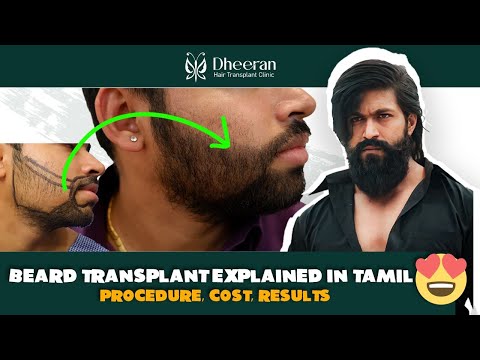
▶ Watch All Videos






 Dr. Vivin Prasadh