

“Doctor, hair transplant later pannikkalam. Ippo ethukku medicine?” Dr. Vivinprasadh hears this almost every week. Here’s why waiting it out can cost you more hair, and fewer options, later.
Many people who notice hair fall decide to skip hair fall treatment and “just do a hair transplant later.” It sounds practical. But hair loss doesn’t pause while you wait, and a transplant can only work with the hair you still have. In this short video (in Tamil), dermatologist and hair transplant surgeon Dr. Vivinprasadh explains why early treatment matters and when a transplant actually makes sense.
Why hair fall treatment shouldn’t be delayed
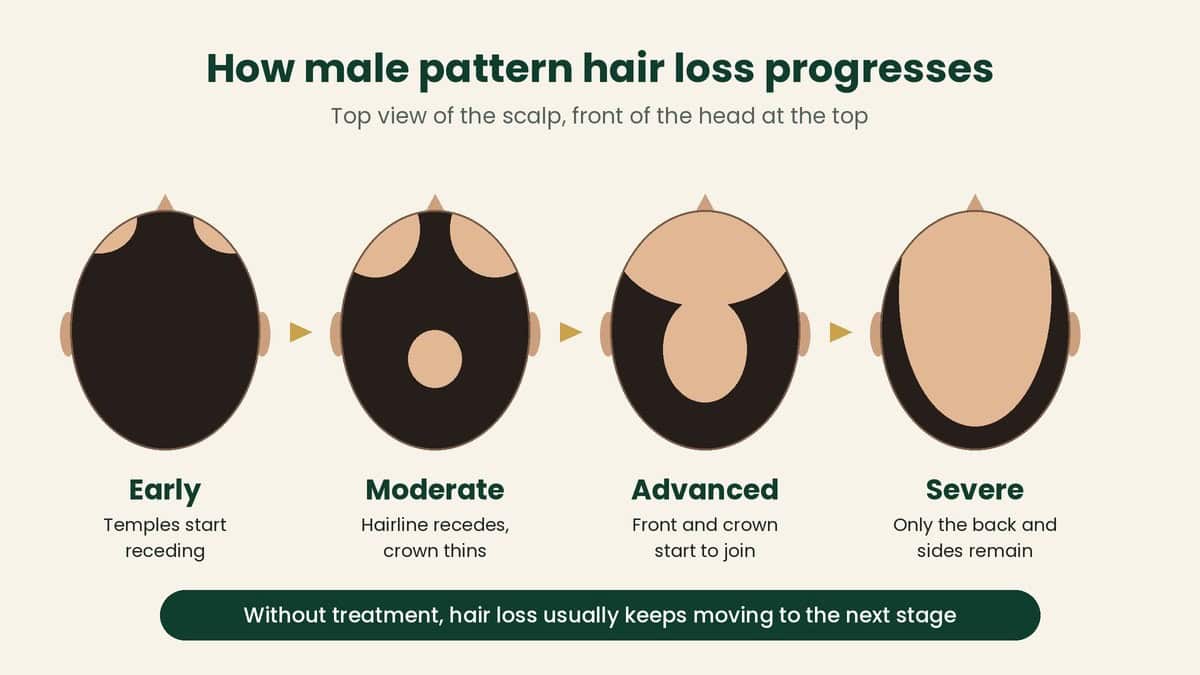
In men, the most common cause of progressive hair loss is androgenetic alopecia (male pattern baldness). It usually starts at the temples or crown and slowly advances over months and years. Doctors track this progression using stages called the Norwood scale.
The key word is progressive. Without treatment, most people move to a higher stage over time. Hair that has already been lost for a long time usually can’t be brought back with medicine alone.
What happens when you delay hair fall treatment
1. The bald area gets bigger
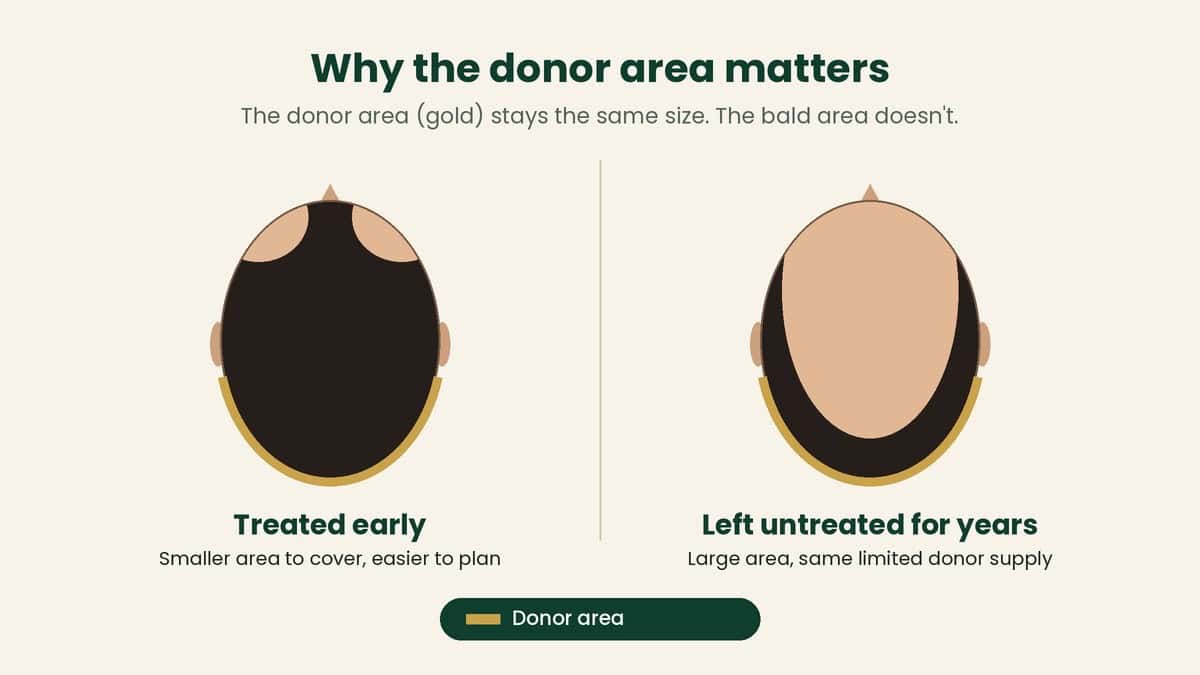
Every year of untreated hair loss can increase the area that eventually needs coverage. A larger area needs more grafts to look natural.
2. Your donor area is limited
A hair transplant moves healthy follicles from the donor area, usually the back and sides of the scalp, to the thinning areas. This supply is fixed. It can’t be regrown or topped up. When the bald area grows larger than what the donor area can cover, achieving good density becomes harder.
3. A transplant doesn’t stop future hair loss
The transplanted hair is generally long-lasting, but the original hair around it can keep thinning. Without medical treatment, you may end up with a transplanted hairline and thinning behind it, which can look uneven.
Hair fall treatment or hair transplant: it’s not either/or
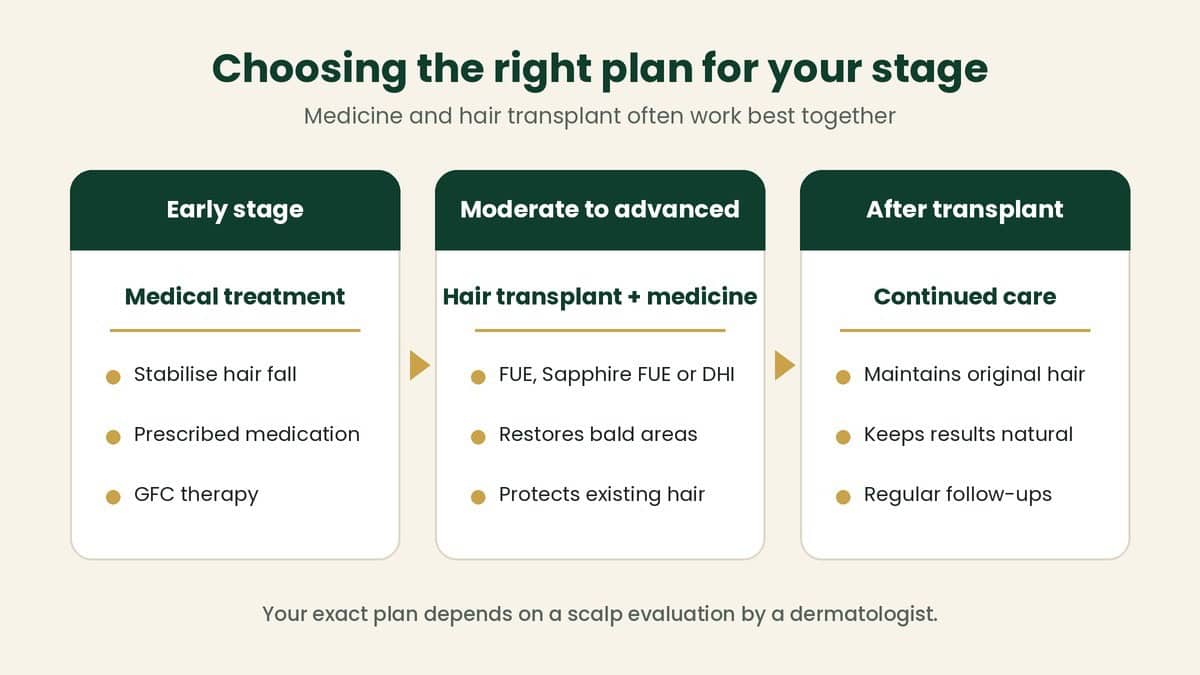
The right plan depends on your stage of hair loss, age, family history and donor area quality:
- Early stage: Medical treatment alone can often slow or stabilise hair fall. Options may include prescribed medication, topical treatments and GFC (growth factor concentrate) therapy.
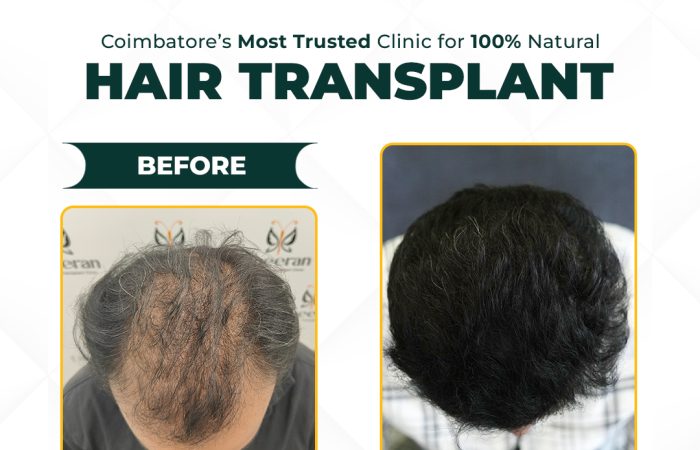
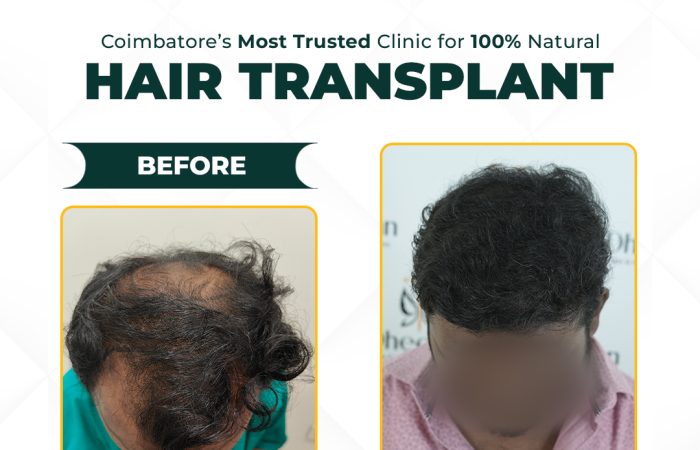
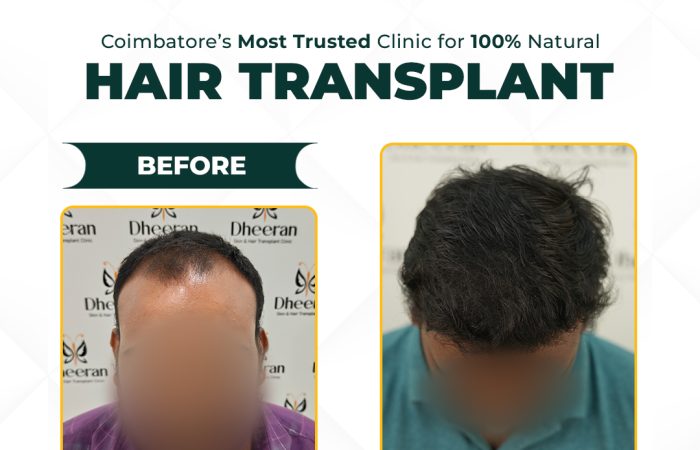
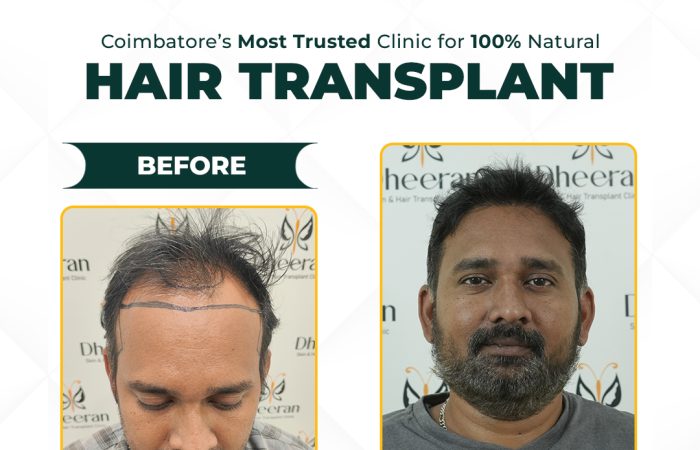
- Moderate to advanced stage: A hair transplant (FUE, Sapphire FUE or DHI) can restore the lost areas, while medical treatment protects the existing hair.
- After a transplant: Continued medical care helps maintain the non-transplanted hair and keeps results looking natural over time.
Any medication for hair loss should be started only after a proper evaluation and taken under a doctor’s supervision.
When should you consider a hair transplant?
A transplant is usually considered when:
- hair loss has created visible bald areas that medicine can’t restore,
- the pattern of hair loss has become reasonably stable,
- the donor area has enough healthy hair, and
- your expectations match what’s realistically achievable.
These points are best assessed in person with a scalp evaluation. Very young patients with rapidly progressing hair loss are often advised to stabilise it first before planning surgery. Learn more about hair transplant at Dheeran Clinic.
Tamil-la summary:
முடி உதிர்வு இருக்கும்போது “இப்போ வேண்டாம், later hair transplant பண்ணிக்கலாம்” என்று wait பண்ணினா, hair loss தொடர்ந்து progress ஆகும். Bald area பெரிசாகும், ஆனா donor area limited தான். அதனால ஆரம்பத்திலேயே சரியான evaluation பண்ணி, உங்க stage-க்கு ஏற்ற treatment plan எடுக்கிறது தான் best.
Frequently asked questions
Can I delay a hair transplant?
You can delay the surgery, but you shouldn’t delay treating the hair loss itself. Untreated hair loss usually progresses, which increases the area to be covered and puts more demand on a limited donor supply.
Can medicine alone stop hair fall?
In the early stages, medical treatment can often slow or stabilise hair fall. It generally can’t bring back hair in areas that have been bald for a long time. A dermatologist can tell you what to expect based on your stage.
Do I need medicine after a hair transplant?
Often, yes. A transplant restores the treated areas, but the surrounding original hair can continue to thin. Medical treatment helps protect that hair and keeps the overall result natural.
What is the donor area and why does it matter?
The donor area is usually the back and sides of the scalp, where hair is more resistant to pattern baldness. It’s the source of all transplanted grafts, and it’s limited, so it needs careful planning.
Not sure what stage your hair loss is at?
Book a consultation with Dr. Vivinprasadh (MD Dermatology, Hair Transplant Surgeon) for a scalp evaluation and a treatment plan that fits your stage.
Book on WhatsApp Call +91 70105 72487Dheeran Skin & Hair Transplantation Clinic, 2nd Floor, Malar Medical Centre, GV Residency Link Road, Sowripalayam, Coimbatore 641028. Consultations by prior appointment, 2 PM to 6 PM.
This article is for general information and isn’t a substitute for a personal medical consultation.
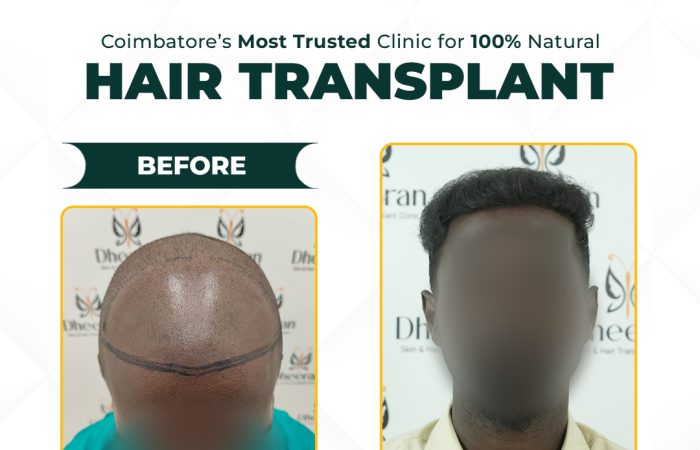
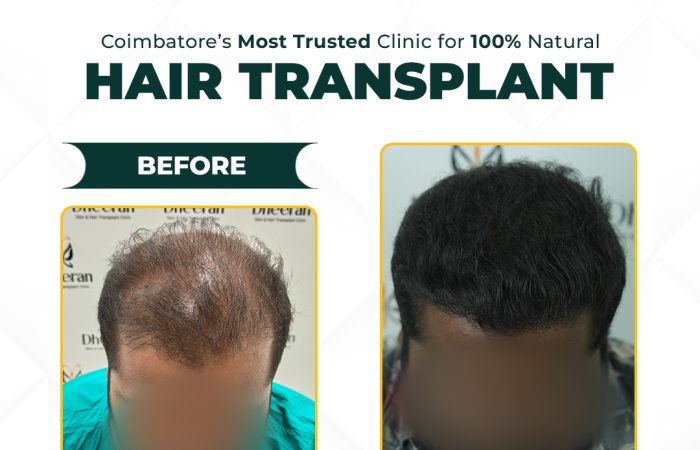
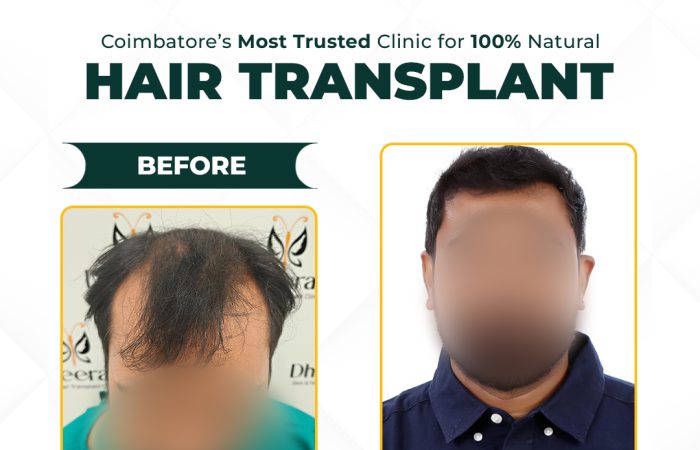
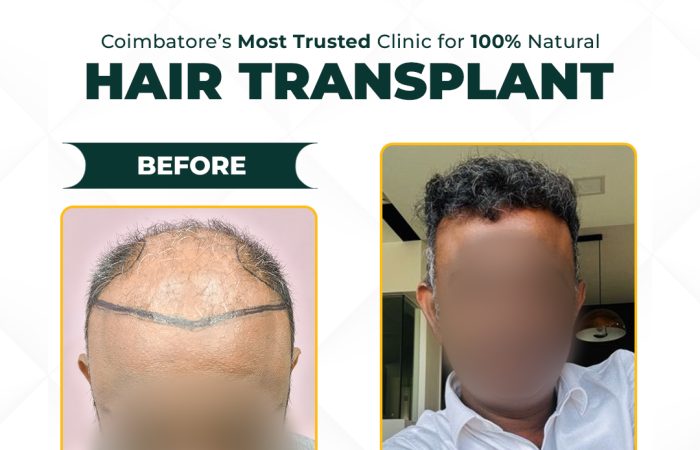

Patient Testimonials & Results
▶ Watch All Videos









 Dr. Vivin Prasadh